A breakdown of the three time Oscar winning film illustrating Mark Zuckerberg’s rise from college student to billionaire.
The 2010 film The Social Network, directed by David Fincher with screenplay by Aaron Sorkin, was the subject of controversy upon its release. The thriller takes the audience through the 2003 Harvard semester of Mark Zuckerberg, a bright computer programmer though mildly socially awkward, as he develops the social media giant globally recognised today as “Facebook.” The story encompasses the pain of heartbreak, the allure of money and fame, and highlights the relationships sacrificed in order to make it to the top. Fincher and Sorkin do a brilliant job highlighting the delicacy of human relationships whilst illustrating the potential of a digital world, yet the ending leaves the audience wondering if all of the damage done to real life relationships was worth the friendships gained via the internet.
Since the development of Facebook, the way in which humans interact has been altered tremendously. Sites developed before, such as Myspace and Friendster, were created with the intention of sharing content online, but Facebook was actually intended to mimic the social interactions found in real life. As shown in the film, Zuckerberg originally developed the idea to take the personal interactions of real life and transfer those interactions into an online database of photos and profiles. Though the film did highlight the immense success and ingenuity of Zuckerberg, the main underlying theme discusses the negative impacts the internet has on real life relationships.
In some of the earlier scenes of the film, Zuckerberg creates a site on the university server that steals the photos of all females on campus and allows people to rank their attractiveness. The male students are instantly excited by the new site, whereas the females are beyond disgusted by the clear lack of respect. Though this idea seems far off and immoral by todays social media standards, platforms such as Facebook and Instagram allow individuals to subconsciously judge the attractiveness of their peers via profile photos and shared content. Though this is not the main focus of social media profiles, we as a society have begun to confuse online beauty with actual beauty.
When Zuckerberg initially created this website, he was able to identify the key aspects of both the internet and human nature that keeps people hooked on the social media platforms. This raises the question: is it necessarily wrong to value online interaction equal to or over that of face-to-face interactions?
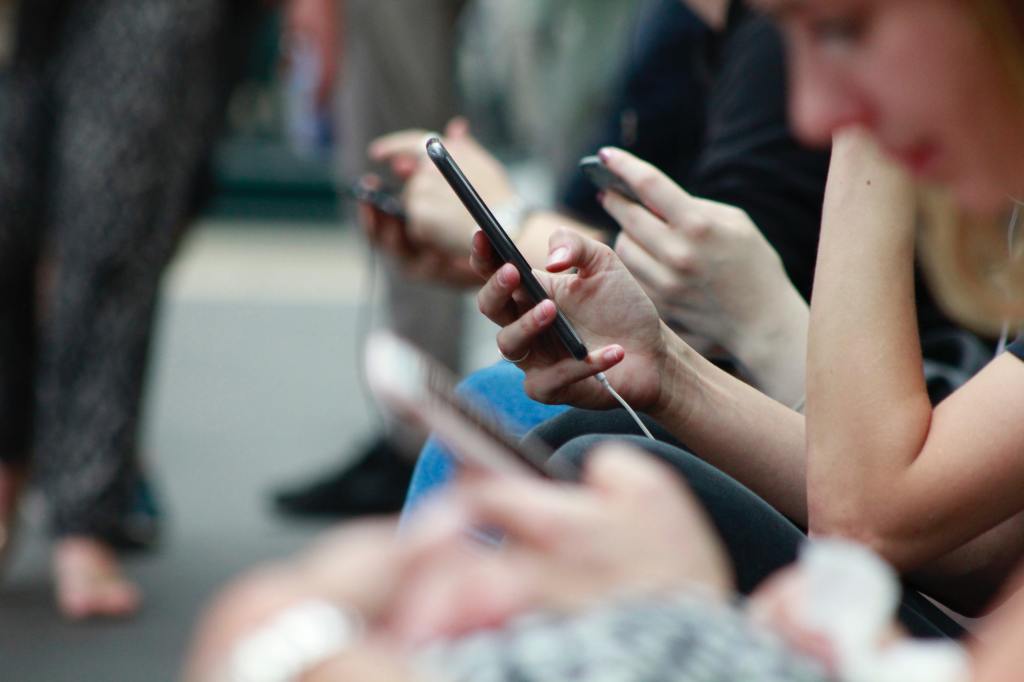
Well, the answer is complicated. As shown in The Social Network, the real life relationships of the characters slowly begin to crumble as they search to add more details to their online profiles. Zuckerberg gains hundreds of thousands of online friends at the same time he loses every single friendship he has in real life. This situation is relatively common in todays digital world. Social media influencers boast millions of followers, liking and commenting on every post, but it is impossible to have millions of actual friends in the real world.
In the case of Nate Garner, a 21 year-old Instagram influencer from California, the young internet star claims that his rise in internet fame has resulted in the loss of offline friends.
“It got to the point where I was suicidal and I didn’t really like myself at all…I’d say [to myself], ‘I get why they hate you.’”
Nick Garner, New York Post 2018
Cases like this are all too common as the influencer industry has risen to an all-time high. Being famous online has seemingly replaced the need for internet celebrities to forge offline relationships. The creation of Facebook is arguable the largest contributer to this social phenomenon, now defining relationships in the 21st century.
The Social Network experiments with the actual story, changing and dramaticizing the history just enough to delineate the negative impacts of social media on our everyday lives. After watching this film, the audience is able to visualize what our online life is costing us. More than that, it shows exactly what these social media giants were willing to sacrifice in the process of giving the public the ultimate tool for global connection or, rather, disconnection: authentic human relationships.
Thanks to films such as The Social Network, we are able to reflect on what our values are as human beings. Today, Facebook is seeing a massive decrease in usage with platforms such as Instagram and Snapchat developing new ways to interact online, but the story of it’s creation can teach us a valuable thing about life. Relationships come and go, but the ones we choose to surround ourselves with in the real world are the ones that leave a substantial mark on our lives. As we continue to advance technologically as a society, we need to remember to slow down and appreciate those around us before we find that we have 500,000 friends online, but no one to talk to in the world around you.
 The Disconnect