How your phone addiction might just be taking over your life more than you think.

In an age driven by technological advancements, it is rare to find someone without access to technology in a first world country. Newspapers have been replaced by online news sources, letters have been swapped for emails and texts, and cherished photo albums have been turned into an Instagram feed. Our generations legacy will be an internet-connected world, full of both infinite possibilities and infinite disconnect. Though we are disconnected physically, there are many benefits of the internet, but studies now show that our reliance on social media and, by extension, technology is more powerful than drug addiction.
In Heidelberg University, a German public university studied the brains of individuals addicted to their smartphones compared to those not addicted. The results they found were very similar to those of drug addicts, such as cocaine users. The grey area of the brain, which is in charge of many cognitive skills, was severely impacted, leading to several downfalls such as mental health issues, decreased oral and written skills, and issues with creativity. The physical changes to the brain, such as the shrinkage of the grey area in the brain, has only been seen in drug abusers. What are the implications for future human intelligence if phone usage is only increasing?
The term “smartphone addiction” is often only associated with the overuse and anti-social behaviour, but the actual term could mean something more severe than we think. The constant new innovations only bring more and more customers each year, but is the device itself the addictive aspect or, rather, the applications downloaded?
A New York Times article published in early February 2020, recounts the stories over 300 students in regards to their phone addiction. Based on their answers, the reason for the excessive usage can be largely placed on social media. Many students feel as though they are unable to stop using platforms such as Instagram and Snapchat as a result of FOMO (fear of missing out). Previously, FOMO could be used to describe the feeling of missing out on a social gathering or not going to work, but today’s FOMO is more central around your social presence online. These students ranked social media presence, i.e. keeping up your online “appearance” and staying up to date on what your friends specifically had for breakfast, as the most addictive and time consuming thing on their phone.
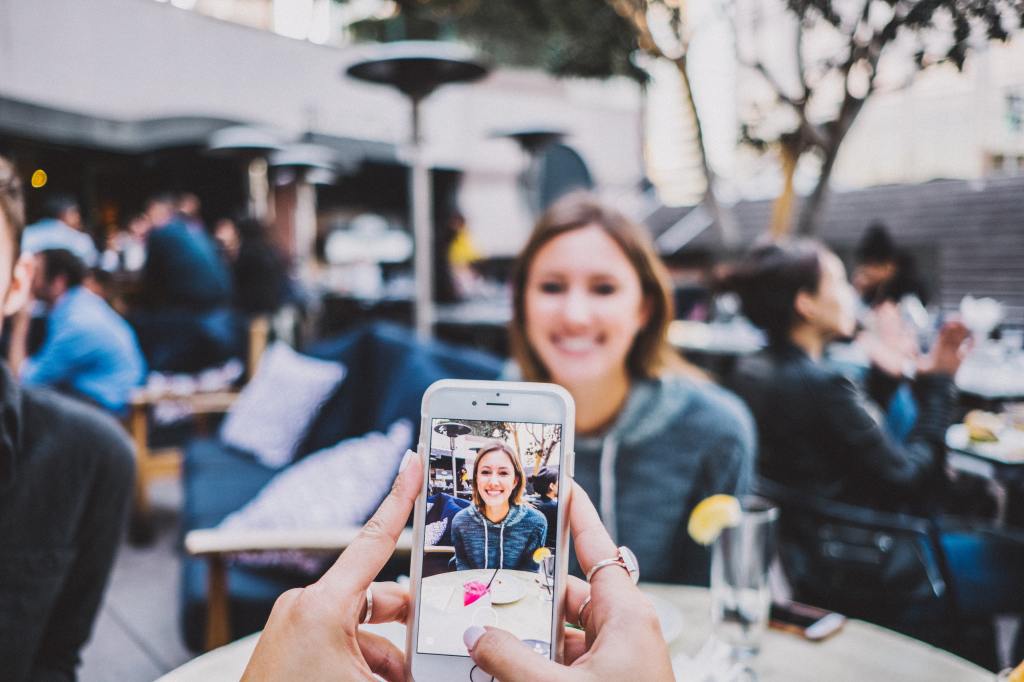
Many social media platforms were actually founded using the science of dopamine to heighten user engagement. The act of giving likes and comments actually sends signals to your brain to release dopamine, a neurotransmitter responsible for sending signals from your nerve cells to your brain. This dopamine then has your brain craving the action, or sensation, that you just performed just as we would crave a glass of water when we are thirsty. This physiological “flaw” in human nature has be used by several social media giants almost to a point of no return.
“When a gambler feels favoured by luck, dopamine is released…This is the secret to Facebook’s era-defining success: we compulsively check the site because we never know when the delicious ting of social affirmation may sound.”
Natasha Schüll, Addiction By Design: Machine Gambling in Las Vegas
Sounds familiar, right? Social media addiction has eerily similar qualities to drug addiction: craving a high given only by completing an action, not knowing what the next experience will be, trying to quit yet ultimately struggling to leave it behind. The parallels between social media and drugs is seemingly a stretch, and yet the symptoms and effects on the brain are nearly identical. Due to the controversial nature of these situations, one could begin to question the ethics of these social media giants. Are they taking advantage of young impressionable minds in order to profit, or is technology solely a tool for innovation? Are we equipping our youth with tools to better take on the future, or are we hindering their ability to have one?
These are questions we must ask ourselves if we wish to fight the deteoriation of human creativity and intelligence. Though media has the potential to connect the entire globe through one singular screen, we are losing our connection with the ones closest to us and, in a way, ourselves. Our generations legacy has the potential to change the world, but we can not allow ourselves to be lost in the process. Sometimes we need to pull out the family photo album, send our friends abroad a hand written letter, maybe even pick up a local newspaper. These small things, though tedious, remind us that we are human, not a series of 1’s and 0’s.
 The Disconnect