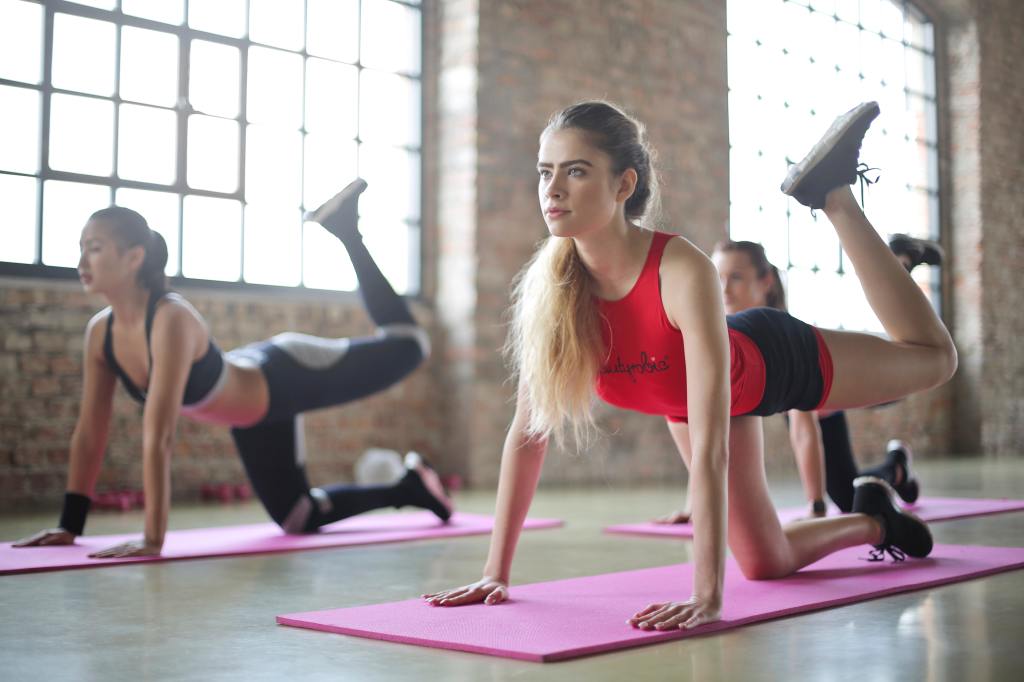
A look how the way we base our own fitness goals is off of the unattainable appearances of social media influencers.
Every year, thousands of new clients rush to the gym after making “new year, new me” resolutions, striving to become the best version of themselves they can be, but what really motivates people to achieve the body of their dreams? Is it the sudden weight gain from the winter holidays or perhaps a method to deal with post New Years festivities guilt? Cassey Ho argues that many of these fitness goals are actually based off of unattainable standards set by social media influencers.
“Platforms like Instagram can tell us exactly who is the most followed and therefore the most influential at this very second. Naturally these influencers have become the new beauty standard.”
Cassey Ho, Glamour, 2019
Ho is currently doing what most influencers seemingly find impossible: exposing the falsities found on social media. Being a fitness influencer herself, exposing the false beauty standards, especially in regards to body expectations, is almost tempting her followers to critique her own page. Instead, many fans were supportive of the body positive movement and the method in which Ho brought light to the subject.
The fitness model decided to create a video, using her successful Youtube channel, to assess the most common features of the 100 most popular Instagram models. She then edited her own images, of both her body and face, and compared her results to the unedited images. Ho came to conclusion that the top 100 women on Instagram were predominately curvy with flat stomachs, yet no visible abs.
By extension, the bodies of many of these top influencers were altered by plastic surgery. When looking at these women, how can we base our body goals off of unrealistic body types? Cassey Ho’s research shows that Instagram beauty is actually largely based off of photoshop and plastic surgery, which demonstrates how false our expectations can be.
In February of this year, Sia Cooper, another fitness influencer, felt inspired by the research of Cassey Ho and decided to spread her own message. Cooper edited a series of images of herself and edited them to match the ideal body standards of each decade, starting from the 1920’s continuing to present day. She found that the ideal body has actually fluctuated significantly since the roaring 20’s, stating that women used to value the more athletic build, but has since become a series of ever so unreachable goals.
Cooper chooses to add to the caption a message of encouragement for all of her followers, asserting that self-image and self-acceptance should come before the expectations of the media. Based on the photos, you see that even the “athletic” body types idealised in the 80’s were mostly influenced by the modelling industry, not out of the benefit for public health.
“This is why I love sharing messages about body image because I know I have younger girls following me who’ve been conditioned to hate their bodies thanks to the celebrities they follow.”
Sia Cooper, Shape 2020
We are now starting to challenge these unrealistic standards by accepting all different body types and skin tones, but more and more we are noticing these overall trends in social media celebrities. No one is forcing us to follow these specific stars, but at the same time we find ourselves drawn to a certain type of image being branded to millions of others. If social media has supposedly made the internet a place of complete equality for all different looking women, then why is there a formula for beauty?
Four time Olympic gold medalist Simone Biles has claimed that even her, an international idol for gymnastics, has been affected by the media’s beauty standards. In terms of overall fitness, Biles would be considered among the most in-shape and athletic people, yet she is still not what we idealise when we think of fitness goals. When most head to the gym, many envision being thin and toned, with a flat stomach and well-defined features, but is this only for the aesthetics?
When did becoming fit depend on others opinions instead of your own self-acceptance? Is this the legacy that social media is leaving? In the most accepting age for body positivity and racial equality, we as humans still find ways to crave something else. With all of the photoshop and plastic surgery, we are beginning to take the “real” out of “reality.”
Being healthy is the biggest priority when considering drastically altering the way you look, but it’s not always easy to accept that some things are unique to you and do not need to be changed. When looking at images on social media, remind yourself that physical beauty is not defined by other humans; beauty is something you have to define yourself. So the next time you add the gym to your list of new years resolutions, question who you’re doing it for: yourself or everyone else?
 The Disconnect